Reading Wuthering Heights in English: Why It's Harder (and More Interesting) Than It Seems
Is reading Wuthering Heights in English a good idea? Find out why it's harder than it seems and how to approach it without getting frustrated.
LexicAIze5 min
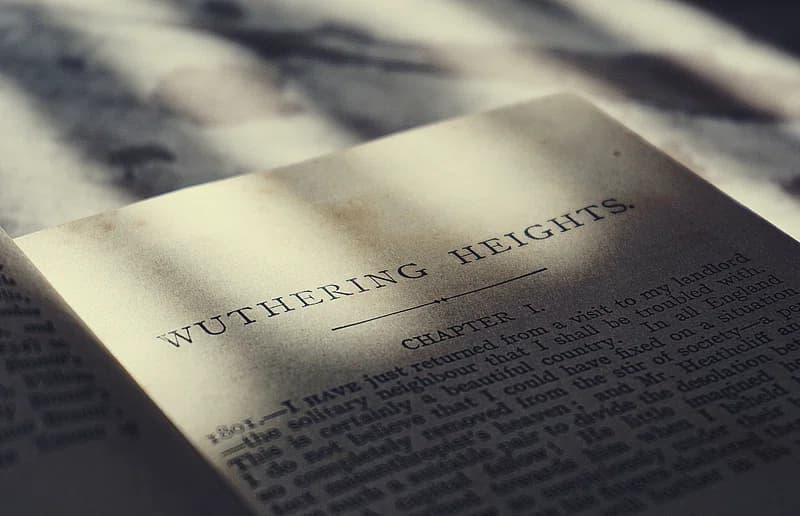
The first time I tried to read Wuthering Heights in English, I thought the problem was my level. I had already read several classics without too much trouble. But then Joseph showed up, opened his mouth, and for half a page I barely understood a thing.
It wasn't my level. It was Emily Brontë.
The myth that all classics are a good place to start
There's a widely repeated idea: if you want to improve your English, read classics. They sound refined, they're in the public domain, and everyone recommends them.
The problem is that not all classics are designed — linguistically or structurally — for a reader who is still consolidating a B2 level. Wuthering Heights is not a linear novel with a transparent narrator. It's an odd literary artifact, with layers, time jumps, and voices that aren't always reliable.
If you've just read something like Jane Austen's Pride and Prejudice, the shift in tone may surprise you. Austen is ironic, yes, but clear. Brontë is harsh. And she doesn't hide it.
It's not a "pretty" book. Nor was it written to make your life easier.
What makes Wuthering Heights difficult (and it's not just the vocabulary)
When someone says a book is difficult in English, they usually mean unknown words. Here the problem runs deeper.
There are three elements that complicate the reading:
- Framed narrator: the story doesn't start from the inside, but through Lockwood, who hears Nelly Dean tell the events. You're reading a story told by someone who heard it from someone else. That introduces distance and ambiguity.
- Constant time jumps: you don't always know exactly when you are until several pages later.
- Joseph's dialect: Brontë reproduces the rural speech of Yorkshire phonetically. Even native readers admit it's awkward to decipher.
For example, Joseph might come out with something like:
"Ye'll happen think ye're fit to be my maister!"
If you're not used to dialect variation, your brain freezes. It's not the standard English you learned. And that breeds insecurity.
On top of that, the emotional vocabulary is extreme. Heathcliff isn't "sad". He's consumed by resentment. Catherine isn't "in love". She's caught between identity, pride, and the desire for social advancement. The vocabulary that goes with that intensity isn't simple.
It's not impossible. But it's not light either.
Heathcliff isn't romantic (and that complicates the reading too)
Many adaptations have softened the story into a kind of stormy impossible love. In the novel, Heathcliff is vengeful, cruel, obsessive. He manipulates Isabella, emotionally abuses those around him, and turns his resentment into a life project.
If you read expecting a romantic story, it throws you. And when the emotional content makes you uncomfortable, your brain works twice as hard: deciphering the language and processing moral ambiguity at the same time.
Reading in another language already demands tolerance for uncertainty. Here you also have to put up with unlikeable characters.
Not everyone wants that when they're trying to improve their English after work.
Precisely why it's worth it
That said: what makes it difficult is what makes it a powerful experience.
When you get past the first few pages and accept that you won't grasp every nuance on first read, something interesting happens. You start reading for overall meaning, not word by word. You stop mentally translating every sentence and focus on tone, atmosphere, and tension.
That shift is gold for anyone wanting to move from B2 to C1.
You also learn something many methods ignore: English isn't homogeneous. There are registers, dialects, levels of formality, narrative voices. Wuthering Heights forces you to live with that diversity.
It's not the ideal book to start with. But it can be the book that marks a before and after if you already have a foundation.
How to read it without getting frustrated
If you decide to take on Wuthering Heights in the original, I'd give you three very concrete tips:
- Don't try to understand 100% of Joseph's dialect. Accept the ambiguity.
- Read in blocks of meaning, not isolated sentences.
- Use tools that let you look things up without breaking the flow.
The third one is key. If every unknown word forces you to leave the text, open another tab, and lose the narrative thread, the experience becomes heavy. And you give up.
It happened to me. The first time I gave up in the first third. The second time I changed how I read: less obsession with every detail and more attention to the whole. It was a different story.
Literally.
Reading Wuthering Heights in English isn't a light decision. It's not a badge to wear for literary posturing either. It's an exercise in linguistic and emotional resilience.
But if you're already at the point where standard English feels too small for you, this book can push you a little further. And that small push, when you handle it well, changes the way you read for good.
If you're thinking about reading classics in English and don't want every unknown word to pull you out of the text, try doing it with a tool that keeps the context while you read. Reading well is more important than reading heroically.
Keep reading
5 min
How to Start Reading Russian Literature in Russian (Without Losing Your Mind on Page 1)
Learn how to dive into Russian literature in its original language, even as a learner. A simple method to overcome that initial hurdle.

6 min
The Dictionary Trap: Why Looking Up Every Word Is Making You Worse at Reading
Reaching for the dictionary every few lines feels productive. It isn't. Here's what compulsive lookups actually do to your reading — and what to do instead.

9 min
Reading books to learn a language: make the page count
Reading books to learn a language works best with a story you can follow. Choose a text, test your understanding and keep a short, useful reading routine.