From Pushkin with Love: How to Tackle the Father of Russian Literature (Without the Headache)
There's a persistent myth among Russian learners that does more harm than good:
“Pushkin is for when you’ve already mastered the language.”
It’s understandable why this misconception exists. Pushkin is the most revered author in Russian literature. He’s considered the father of modern Russian. He’s the writer whom Russians quote from memory from childhood. With such an esteemed status, it seems logical to assume that reading him in the original is a pursuit reserved for advanced learners.
But it’s quite the opposite. Pushkin isn’t the finish line; he's the perfect starting point.
Why Pushkin is Placed on an Unattainable Altar
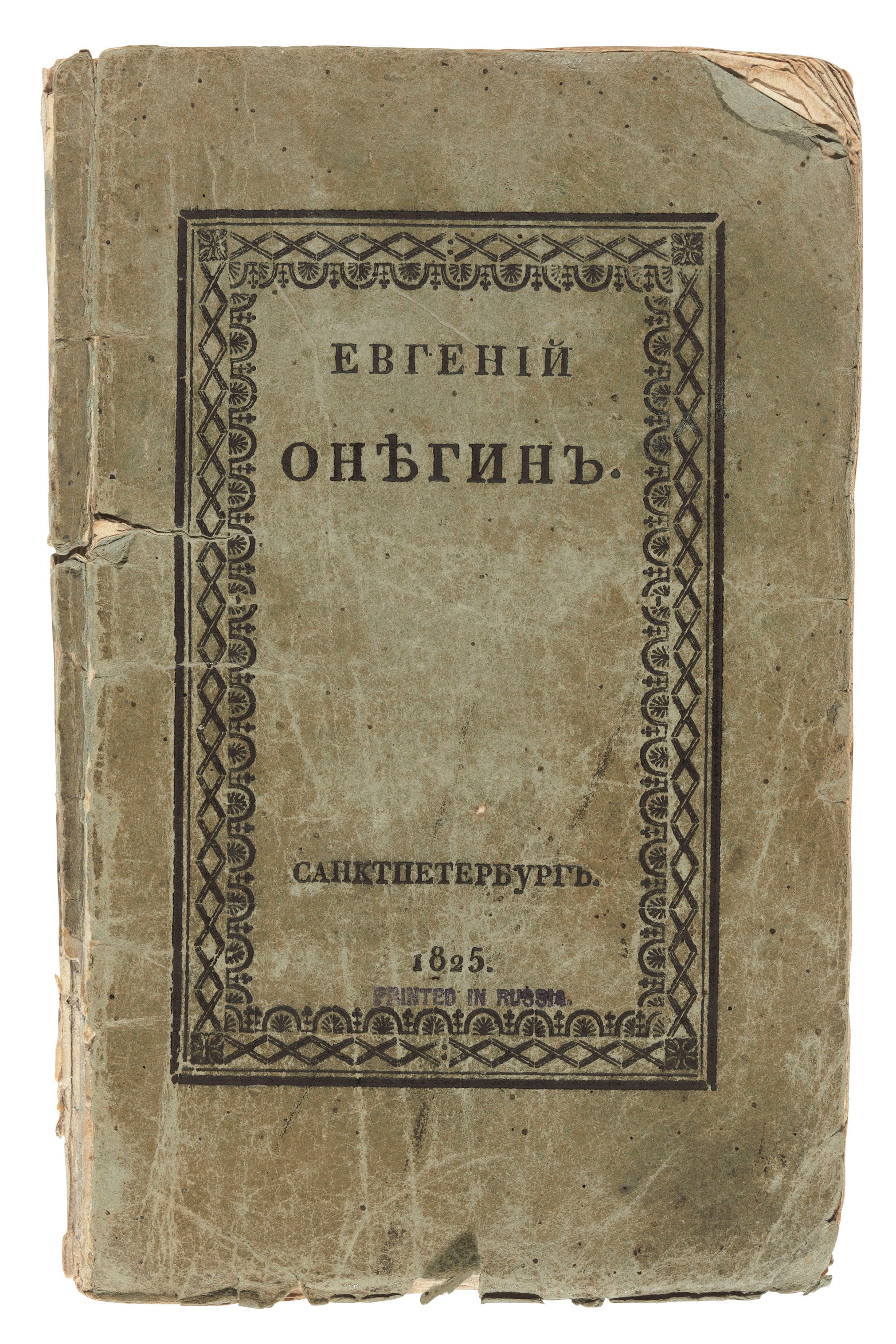
Aleksandr Pushkin died in 1837 at the age of 37, in a duel. In his short life, he produced a body of work that remains the backbone of Russian culture: poems, short stories, plays, and his magnum opus, the novel in verse Eugene Onegin.
Russians have a relationship with Pushkin that’s hard to find an equivalent for in other cultures. It’s a blend of Shakespeare and a national icon. His verses are memorized in school, quoted in everyday conversations, and feature prominently in films and TV shows. Modern Russian, in many respects, bears the direct imprint of his pen.
And herein lies the misunderstanding: something being significant doesn’t automatically make it difficult. Pushkin wasn’t writing for academics; he was writing to be read, felt, and recited aloud. His Russian possesses a musicality and clarity that, with the right support, is perfectly accessible to a motivated beginner.
Eugene Onegin: The Ideal Starting Point
Of all Pushkin's works, Eugene Onegin is the most strategic choice for a beginner. Not because it’s the easiest, but precisely the opposite: it’s the most comprehensive, making it the finest teacher.
It’s a novel in verse. Each stanza follows a fixed structure—the so-called "Onegin stanza"—of fourteen lines with a defined rhyme scheme. What might seem like a complication at first glance is actually a tremendous advantage when learning a language.
Why? Because the metrical regularity offers comprehension clues that prose doesn’t. When a word fits the rhythm, you know you’ve understood it correctly. When it doesn't, something’s amiss. The poem itself guides your reading.
Furthermore, the vocabulary in Onegin isn’t archaic or technical. It’s the Russian of 19th-century daily life: conversations, letters, emotions, landscapes. Exactly the kind of vocabulary you need when you’re just starting out.
What Pushkin Offers That Tolstoy Doesn't
If you've encountered Anna Karenina, this distinction will be particularly relevant.
Tolstoy writes in blocks. His paragraphs are long, his sentences subordinate clauses chained together for line after line, and his descriptions demand that you hold a vast amount of context in your memory simultaneously. For a beginner, this is a significant cognitive load.
Pushkin, on the other hand, writes in small, self-contained units. Each stanza of Onegin is a complete thought. You can read a stanza, understand it, enjoy it, and pause. You don’t need to have read the preceding hundred pages for that stanza to make sense and hold beauty.
This makes him the ideal author for short reading sessions, for those days when you only have ten minutes instead of an entire afternoon, and for building the habit of reading in Russian without it feeling like an exhausting commitment.
What Happens When You Read Pushkin with Lexicaize
The biggest hurdle for a beginner opening Eugene Onegin isn't grammar or meter. It's vocabulary.
Pushkin employs a rich and precise Russian. Every word is chosen as much for its sound as for its meaning. This is wonderful from a literary standpoint and a genuine challenge when you encounter words outside your basic vocabulary.
This is where Lexicaize completely transforms the experience.
Instead of interrupting your reading to consult an external dictionary—losing your flow, the musicality, the pleasure—you simply tap the word in Lexicaize and get the meaning instantly, without leaving the text. The stanza remains before you. You can reread it in its entirety, now with full comprehension, and what was once confusion transforms into a brief moment of insight.
Lexicaize doesn’t just translate. It records every word you interact with and automatically builds your personal review system. Without any extra effort on your part, you’re building real vocabulary—Pushkin’s vocabulary—every time you read.
The Russian You Learn with Pushkin Stays With You
There’s a vast difference between learning a word from a list and learning a word within the context of a poem that has moved you.
Lists are forgotten. Poems are not.
When you learn тоска—that uniquely Russian melancholy with no exact English equivalent—in the context of Pushkin’s verses, the word isn't just another data point. It’s an emotion you’ve felt while reading. And that stays.
This is what makes reading Pushkin with Lexicaize a profoundly different way of learning Russian compared to any flashcard app or structured course. You aren't studying the language; you are inhabiting it.
How to Start if You're a Complete Beginner
No special preparation is needed. Just follow this order:
- Begin with Chapter I, Stanza 1. It’s fourteen lines. Less than ten minutes. Read it aloud, even if you don't understand everything—the rhythm will help you memorize.
- Use Lexicaize for unfamiliar words, but don’t stop at each one. Read the entire stanza first, then go back to the words you didn't understand.
- Reread the stanza after consulting. This second pass, with the vocabulary now clear, is where the magic happens. The verse comes alive.
- Don't pressure yourself with quantity. Two or three stanzas a day are enough to progress and enjoy. Onegin has 389 stanzas. At this pace, you'll have read a complete masterpiece in Russian in about four months.
- Listen while you read. There are audio versions of the poem read by native Russian actors. Reading and listening simultaneously is one of the most effective ways to internalize pronunciation and rhythm.
The Secret Russian Teachers Don't Always Share
There’s something linguists know and very few people apply: pleasurable reading is the most effective language acquisition method there is.
Not grammar exercises. Not vocabulary cards. Not exams. Reading texts that interest you, at a level slightly above your own, is what accelerates language learning the most.
For many Russian learners, Pushkin is that text. A text that captivates, that sounds beautiful, that tells a story that matters—Onegin's ennui, Tatiana's impossible love, the tragedy of the duel—and therefore, is read with genuine enthusiasm.
With Lexicaize as your safety net, the difficulty level ceases to be a barrier. You can read slightly above your current level without frustration, because you’re never stuck on a word for more than a second.
Start with the Fourteen Most Famous Lines in Russian
The first stanza of Eugene Onegin begins:
«Мой дядя самых честных правил, Когда не в шутку занемог, Он уважать себя заставил И лучше выдумать не мог.»
My uncle, a man of the highest principles, when he fell seriously ill, commanded respect and couldn’t have picked a better time.
Fourteen Russian words to open one of the greatest works in universal literature. No jargon, no obscure vocabulary, with an irony that remains perfectly understandable two hundred years later.
See? It wasn’t so difficult after all.
Download Lexicaize and keep reading. The rest of the poem awaits you.
Related posts
5 Reasons Russian Learners Abandon Classics (and the Unexpected Solution)
If you've tried to read a Russian classic and left it unfinished, it's not your level's fault. It's your tool's fault. Here are the 5 real reasons behind giving up, and how Lexicaize solves them one by one.

Reading Anna Karenina in Russian: From Impossible Dream to Reality with a Single App
Dreaming of reading Anna Karenina in its original Russian, but don't know where to start? Discover how Lexicaize breaks down the vocabulary barrier, making this once-impossible goal entirely achievable.