Bilingual books for adults: choosing a useful edition
Choose bilingual books for adults by checking the original, translation and layout. Compare a Spanish passage, then decide between print and digital reading.
LexicAIze10 min
The best bilingual books for adults let you find an answer in the translation and return to the right sentence in the original. Before choosing one, inspect a sample spread, identify the translator and check whether the source text is complete or adapted. Two languages on the cover are a promising introduction. They are not yet a working relationship.
An English-speaking reader learning Spanish needs more than the assurance that English is available somewhere nearby. You need to know what the Spanish actually is, how the two versions correspond and whether the story interests you enough to keep reading. A simplified story can be a sensible choice. So can an original with help. The trouble is paying for one while expecting the other.
This guide treats the edition as the thing to examine, rather than offering another list of supposedly easy novels. A short passage from Cervantes will show why a translation can clarify the meaning while making some features of the original less visible. That is a reason to compare carefully, not to ban the English page.
Bilingual books for adults need an identifiable original
Start with the publication details. Look for the original title, source language, translator and any editor or adapter. A collection of selected stories is not the complete works of its authors; an adaptation is not the same text with difficult words explained. These distinctions change what you can reasonably compare with another edition or an online transcription.
The direction of translation matters too. A Spanish original with an English translation lets you examine how a Spanish-language writer built a sentence. An English original translated into Spanish offers a different exercise: reading a translator's Spanish. Either may suit your purpose. If your interest is a particular author's voice in its original language, make sure the edition actually contains that language of composition.
For a concrete catalogue example, Penguin's Short Stories in Spanish, edited by John R. King is described by its publisher as a dual-language collection of ten stories with parallel translations and notes. The paperback listing gives ISBN 9780140265415 and 256 pages. Those details identify an edition you can investigate, rather than a vague promise of "Spanish stories" that could mean several different books.
The description also identifies writers including Gabriel García Márquez, Javier Marías and Isabel Allende. That makes it a candidate for someone who wants literary short fiction. It does not establish that every story will be manageable at your level. Nor does the listing demonstrate how comfortable the print is in your hands. This is a catalogue example, not a review based on reading or testing that paperback.
Use the official sample or a library copy to settle what the catalogue cannot. Try a dialogue and a descriptive paragraph. If the source text defeats you even with occasional help, a clearly labelled graded edition may be more suitable for sustained reading. Being an adult gives you the right to choose adult interests, not an obligation to struggle through an unabridged masterpiece before breakfast.
Check how easily you can move between the two versions
Facing pages make comparison tempting because both texts remain available. They can also make it very easy to read only the English. Alternating paragraphs shorten the distance between versions but interrupt the visual continuity of each language. Columns work well at some page sizes and badly at others. The useful question is whether you can return to the exact place where your doubt began.
A sentence may take more lines in one language than the other. That alone is not an error. Look for corresponding paragraphs and changes of speaker, rather than expecting identical line lengths. If one version combines two sentences or divides a long one, you need enough structure to recognise that relationship without treating every difference as a missing phrase.
| Format | What to check in a sample | A possible drawback |
|---|---|---|
| Facing pages | Can you find the matching paragraph quickly? | Your eye may settle permanently on the familiar language |
| Two columns | Is each column wide enough at the actual reading size? | Narrow columns can make both texts uncomfortable |
| Alternating paragraphs | Are the boundaries and speakers clear? | The translation interrupts each stretch of original text |
| Digital parallel reading | Does changing the font preserve a clear correspondence? | A good desktop layout may behave differently on a phone |
Notes deserve a separate look. An explanation of a historical reference can answer a question that an ordinary dictionary cannot. A page covered in numbered interruptions may suit close study better than continuous reading. Neither design is inherently more serious. Decide whether you want to follow a story or examine a few paragraphs, then choose a layout that supports that activity.
For a first book, test the difficulty as well as the typography. The existing selection of books to learn Spanish for beginners gives possible starting texts and specific obstacles. A bilingual edition of a title does not automatically lower the difficulty of its original prose. It supplies help; you still need to decide whether that help is enough.
Cervantes: a translation can answer the wrong question neatly
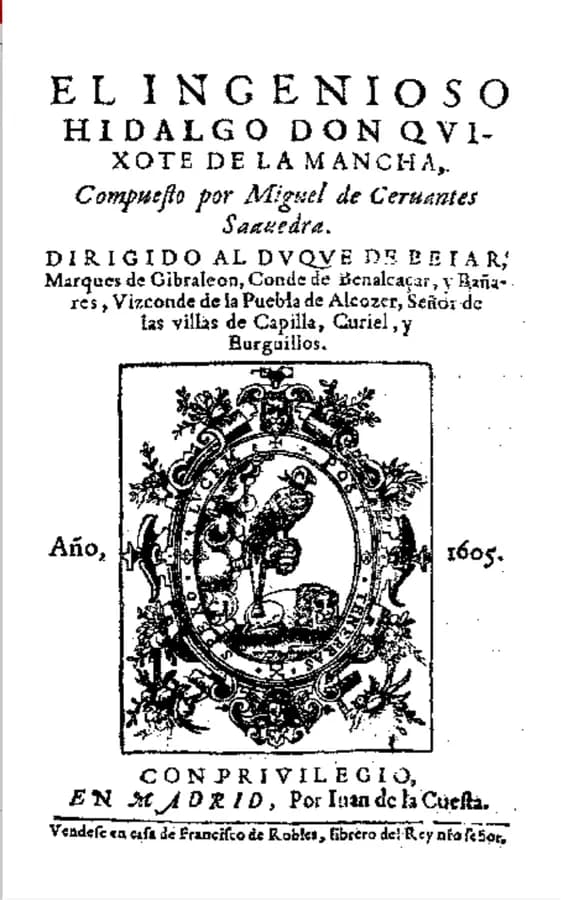
At the beginning of Don Quijote, Part One, chapter I, the narrator locates the story while withholding the place's name. Here is the opening fragment, ending at its original comma:
En un lugar de la Mancha, de cuyo nombre no quiero acordarme,
One working translation for this example is "In a place in La Mancha, whose name I do not wish to remember". Another would be "In a village in La Mancha, whose name I would rather not recall". These are explanatory versions written here, not quotations from published English translations and not claims about the wording in Penguin's anthology. Cervantes is a separate example.
The small group no quiero is worth your attention. It expresses not wanting to do something. A gloss that says "whose name I cannot remember" would replace that choice with an inability. Both English phrases are perfectly readable. Only one kind of explanation preserves the refusal expressed by the Spanish. Fluency on the English side is therefore not enough to settle your question about the original.
Now look at de cuyo nombre. English can use "whose name" without matching each Spanish word in the same order. The relative phrase takes you back to the place just mentioned. If you understand the individual nouns but lose this connection, another vocabulary lookup will not necessarily help. Ask what the phrase refers to, then check how the translation carries that relationship.
The ending -me in acordarme belongs to the construction being used with the speaker. English does not need to reproduce it as a separate "myself" in this sentence. A translation can make the meaning accessible while leaving that difference in grammatical form almost invisible. Once the meaning is clear, return to the Spanish and notice how the expression is assembled. You do not have to turn this short fragment into a complete lesson on every use of acordar.
Even lugar involves a choice. The more general "place" stays close to a broad English equivalent; "village" gives the location a more specific shape. This comparison is not a competition to crown a universally correct English word. It shows why the translator's job cannot be reduced to keeping every word in a tidy row. For learning, the useful result is being able to point to the Spanish and explain which decision the English made.
The rest of Cervantes's opening sentence introduces the hidalgo and a list of possessions. That older vocabulary creates new demands beyond this familiar beginning. A parallel version does not certify the whole novel as suitable for a beginner. You can examine these few lines profitably and choose a more accessible story for your next uninterrupted half-hour.
Use the translation to settle a doubt, then locate the evidence
Give the English side a specific job. In the Cervantes example, your question might be whether the narrator has forgotten the name or declines to supply it. Read the explanation, return to no quiero acordarme and find the evidence. The consultation has solved a problem that mattered. There is no prize for pretending you never looked across the page.
For a short trial, cover the translation of one paragraph, attempt the original and describe what you understood. Uncover only the part that remained uncertain. Then read the original again. This is a practical way to use the edition, not a scientifically established prescription or a promise that support must disappear after a particular number of weeks.
You can also read a bilingual book chiefly to compare style. Once you understand the action, ask where the translator has made something more explicit, changed the order or chosen a more natural expression. The two texts can remain useful together after the first vocabulary difficulties have passed. Translation need not be a temporary embarrassment that the accomplished reader is expected to hide.
Reading the full English paragraph first is a different activity. It may make the story enjoyable and help you approach a demanding original, but it makes your independent understanding harder to judge. Choose that route deliberately if it serves your purpose. If you want a broader routine for comprehension and review, the guide to reading books to learn a language handles that question separately.
Print, a digital reader and a translated EPUB are different choices
Print fixes the type size, notes and page arrangement in advance. That can make a carefully chosen edition pleasant to compare, especially when you want both versions visible without adjusting an interface. It also means that tiny type remains tiny. A photograph of a spread enlarged on a shop page is poor evidence for how comfortable the physical book will be.
With a digital edition, inspect the sample on the device you intend to use. Increase the font and check whether the correspondence remains intelligible. See how dialogue, italics and paragraph boundaries are presented. The word "bilingual" tells you that two languages are involved; it does not guarantee a particular layout or identical behaviour across every reading application.
A translation generated by software is another kind of assistance. Treat it as a version to check against the source, particularly when voice, ambiguity or an idiom matters. Do not assume that an attractive display is evidence of editorial revision. Equally, identifying a named translator does not remove the need to choose an edition whose purpose and difficulty suit you.
Producing a downloadable translated file is a separate need from consulting help during reading. The guide to translating an EPUB compares routes for that task. LexicAIze's web EPUB translation service and its reading app serve those distinct purposes; reading with a translation alongside the original does not imply that the reader exports a translated book.
Choose bilingual books for adults by the movement between the texts: which original you are reading, whose translation you can identify and how easily you can compare a sentence. A useful edition should make that return possible. The English page can stay beside you. It simply need not finish every sentence before the Spanish has had a chance to speak.
LexicAIze invites you to read the original with a translation beside it and consult words in context. Try the support on a passage, then return to the original to check what it helped you understand.
Keep reading
9 min
Reading books to learn a language: make the page count
Reading books to learn a language works best with a story you can follow. Choose a text, test your understanding and keep a short, useful reading routine.

8 min
Books to learn Spanish for beginners: five first reads
Five books to learn Spanish for beginners, with honest difficulty notes, two short passages and a way to choose a first read you can finish.
5 min
How to Start Reading Russian Literature in Russian (Without Losing Your Mind on Page 1)
Learn how to dive into Russian literature in its original language, even as a learner. A simple method to overcome that initial hurdle.