Books to learn Spanish for beginners: five first reads
Five books to learn Spanish for beginners, with honest difficulty notes, two short passages and a way to choose a first read you can finish.
LexicAIze8 min

Start with one story from Horacio Quiroga's Cuentos de la selva, rather than an entire famous novel. Among books to learn Spanish for beginners, a short narrative you can follow is a better first purchase than a masterpiece you can only admire from the cover. Papelucho offers another route through a child's diary; Manolito Gafotas is a step towards conversational Spanish from Spain.
These are books written for readers, not grammar exercises. That distinction has a price: none is guaranteed easy at A1. If you can follow a simple account of yesterday's events, roughly A2 to early B1, try the opening pages with a dictionary or parallel translation. The levels below are editorial estimates based on language and structure, not certified labels attached to the books.
Choosing books to learn Spanish for beginners by the obstacle
Short does not always mean simple. A page of poetic description can demand more attention than three pages of someone explaining what happened at school. Choose the difficulty you can tolerate: unfamiliar animal names, local slang, figurative language or a longer sequence of events.
| First read | Best starting use | What may stop you |
|---|---|---|
| Cuentos de la selva, Horacio Quiroga | One complete story, with support around A2-B1 | Regional nature vocabulary and past tenses |
| Papelucho, Marcela Paz | A diary entry, around early B1 | Chilean expressions and a child's unexpected logic |
| Manolito Gafotas, Elvira Lindo | A chapter, around B1 with help | Nicknames, jokes and colloquial Spanish from Spain |
| Platero y yo, Juan Ramón Jiménez | Selected short chapters, around B1 with support | Images and comparisons rather than plot |
| Relato de un náufrago, Gabriel García Márquez | A sustained adult narrative, towards stronger B1 | Sea vocabulary and a longer reading commitment |
This order is a starting route, not a league table. A learner who hears Spanish from Spain every day may find Manolito easier than Papelucho. Someone who dislikes children's narrators may prefer the sea story and accept more dictionary work. Interest earns its place in the decision.
Borrow a copy or use an official preview before buying. Read two pages and explain, in English if necessary, who is present and what has changed. If the answer disappears as soon as you close the book, choose something easier or add support. Counting unknown words won't rescue a lost plot.
Quiroga and Papelucho: finish something before choosing a novel
1. Cuentos de la selva: begin with "La tortuga gigante"
Quiroga's story begins with a sick man who leaves Buenos Aires for the countryside. That gives you a person, a problem and a reason for moving almost immediately. Later, a turtle helps him. You can follow the action before knowing every word used for the forest.
Try this sentence from "La tortuga gigante":
Vivía solo en el bosque, y el mismo se cocinaba.
Vivía gives an ongoing situation, while se cocinaba says he cooked for himself. The point of that se is worth looking up; the sentence still gives you a useful picture without a complete lesson on reflexive verbs. Notice that the linked transcription prints el mismo without the accent you would expect on the pronoun. Editions and online transcriptions can differ. Use a reliable modern edition when studying spelling.
Start with this story rather than assuming that all the collection has the same difficulty. There is illness and animal violence, so a book marketed to children need not be a gentle bedtime read. Its manageable unit is the individual story.
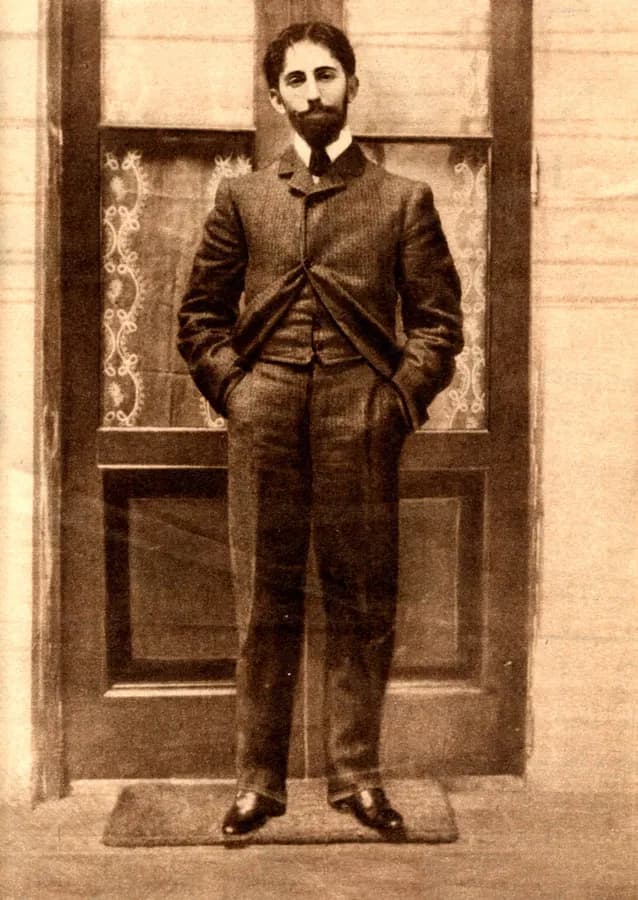
2. Papelucho: a child with his own explanations
Marcela Paz's Papelucho takes the form of a child's diary. The National Library of Chile's account describes a character who is irreverent rather than exemplary, living with his family and Domitila, the household employee who cares for him. This is a voice with opinions, not a child installed to teach you the present tense.
The diary format gives you natural places to stop. Try one entry, identify what Papelucho thinks happened, then ask whether his explanation makes sense. You are practising the difference between understanding a sentence and trusting a narrator.
Its Chilean language is a reason to choose it if Chile interests you. It also means that a dictionary entry from Spain may not settle every phrase. Early B1 is a more realistic starting point than expecting effortless reading because the speaker is young. Use a current authorised edition; the library's historical information is not a licence to reuse the novel.
Three next steps, with three different kinds of difficulty
3. Manolito Gafotas: conversation has a local address
Elvira Lindo's Manolito lives in Carabanchel Alto, Madrid, with his parents, his grandfather Nicolás and his younger brother. Family and school give the reader a familiar setting. The challenge comes from the telling: nicknames, exaggeration and informal speech carry much of the humour.
Choose it when you want Spanish from Spain and are prepared to investigate phrases rather than single words. Don't turn every nickname into vocabulary homework. Keep track of who it refers to and move on. At B1, support may still be necessary; understanding the events comes before catching every joke.
A children's book can be the right choice for an adult. It can also be irritating if its humour leaves you cold. Try the publisher's sample and let that decide.
4. Platero y yo: read a chapter for its language
The opening of Juan Ramón Jiménez's Platero y yo offers an unusually compact description:
Platero es pequeño, peludo, suave;
Three adjectives describe the donkey. Pequeño may already be familiar; peludo connects to pelo, hair; suave describes the texture. This is useful language you can attach to a concrete creature. The difficulty increases when the description moves into comparisons and poetic images.
Selected chapters can suit a supported B1 reader who enjoys rereading. This is a poor choice if your motivation depends on finding out what happens next. Read a small section carefully and describe one image in ordinary Spanish. Short lyrical prose rewards that pace.
The linked text is an older edition with historical spelling. Project Gutenberg's availability does not establish public-domain status in every country; a modern edition's notes or translation may have separate rights. The short quotation here is for analysis, not an invitation to redistribute a whole edition.
5. Relato de un náufrago: one adult story to sustain
Gabriel García Márquez recounts Luis Alejandro Velasco's ten days adrift at sea. A single survivor and a concrete situation make this a more focused first approach to the author than a novel with many generations and intertwined stories.
Save it for when you can keep a past-tense narrative in your head between reading sessions. Sea vocabulary will require help, but there is a difference between a new word for a piece of equipment and losing who did what. Look up the former selectively; reread for the latter.
A stronger B1 reader may find the continuous story motivating. Someone still decoding each verb should start shorter. The name on the cover is not a reading level.
Give the first book a small, repeatable job
For the first week, choose one book and read one story, diary entry or short section. At the end, write two plain sentences about what happened or what you pictured. Keep three useful expressions with their original context. Those numbers are a practical limit on homework, not a scientific optimum.
Return to the section the next day before opening a new one. If you can follow it with fewer interruptions, continue. If each page is still a translation exercise, use a parallel text or choose a simpler story. There is no virtue in spending an evening proving that a book is too difficult.
Our guide to reading an EPUB with a contextual dictionary explains the digital option. The dictionary trap is a useful warning when looking things up starts replacing reading. A printed book and an ordinary dictionary can do the job too. For a separate translated file, the EPUB translation comparison describes a different task from reading with help.
Books to learn Spanish for beginners should leave you wanting another page. After your first complete Quiroga story, that page might belong to Papelucho, a Madrid schoolboy or a sailor. The useful milestone is small: you close the book and the scene is still there.
Cover photograph: ProtoplasmaKid / Wikimedia Commons, CC BY-SA 4.0. Cropped and resized for this article; the adapted image remains under the same licence.

LexicAIze offers parallel reading and a dictionary that explains a word in its sentence. Try a passage from a book you are entitled to read, keeping the Spanish in view.
Keep reading
4 min
How to Read an EPUB in Another Language With a Contextual Dictionary
Learn to import an EPUB, read with translation support and check words in context without losing the story. A practical guide tested in LexicAIze.

5 min
How to Start Reading Russian Literature in Russian (Without Losing Your Mind on Page 1)
Learn how to dive into Russian literature in its original language, even as a learner. A simple method to overcome that initial hurdle.
5 min
Reading Wuthering Heights in English: Why It's Harder (and More Interesting) Than It Seems
Is reading Wuthering Heights in English a good idea? Find out why it's harder than it seems and how to approach it without getting frustrated.